
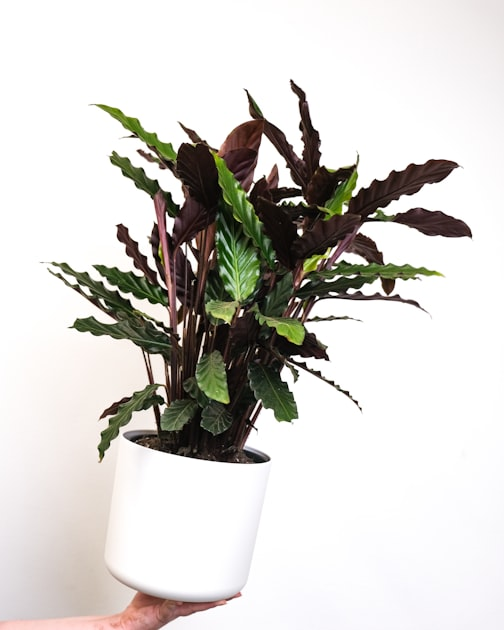
You check your plant this morning. Several leaves are curled inward. They look like they’re trying to close. Yesterday they were flat and normal.
Something is wrong. But what?
Curled leaves tell you your plant is stressed. But the type of curl reveals the specific problem. Leaves curling down mean something different than leaves curling up. Edges curling in have a different cause than the whole leaf rolling lengthwise.
Most people guess wrong. They see curled leaves and assume underwatering. They water the plant. The curling gets worse because the actual problem was overwatering or pests or temperature stress.
Here’s the truth: Six main issues cause houseplant leaves to curl. Each creates a distinct curling pattern. Learn to read these patterns and you’ll diagnose the problem in 30 seconds instead of guessing for weeks.
This guide shows you exactly what each curl pattern means. You’ll match your plant’s specific curl to one of six causes. Then you’ll get the exact fix for that problem only.
The curled leaves might not unfurl completely. Severe curling causes permanent damage. But you’ll stop new leaves from curling and your plant will recover with healthy growth.
What Leaf Curling Actually Tells You
Leaves curl as a stress response. The plant is trying to reduce surface area exposed to whatever is stressing it. Less surface area means less water loss or less exposure to heat or pests.
The curling happens when cells on one side of the leaf grow or shrink differently than cells on the other side. This creates tension that pulls the leaf into a curl.
Underside cells shrinking faster than top cells makes leaves curl upward. Top cells shrinking faster makes leaves curl downward. Edges pulling in while the center stays flat creates cupping or canoe shapes.
Different stresses affect different leaf cells. This is why each problem creates a unique curl pattern. Water stress affects cells differently than temperature stress or pest damage.
Your job is reading the pattern. Look at how the leaves curl. Look at which leaves curl. Look at what else is happening like yellowing or brown spots. These clues tell you exactly what went wrong.
The 6 Causes of Curling Leaves and Their Patterns
Cause 1: Underwatering (Leaves Curl Inward from Edges)
What It Looks Like:
Leaf edges curl inward toward the center. The leaf looks like it’s trying to roll into a tube. Multiple leaves affected across the plant. The curled edges feel dry and papery. Leaf tips might be brown and crispy. The entire plant might look droopy or wilted.
Older lower leaves curl first. New growth stays relatively normal at first. As underwatering continues, more leaves curl.
Why It Happens:
The plant is desperately trying to conserve water. Curling reduces surface area exposed to air. This slows evaporation. The plant sacrifices some leaves to save itself.
Cells along leaf edges lose water first because they’re exposed on three sides. As these cells shrink, they pull the leaf edge inward.
The Test:
Check the soil. Stick your finger 2-3 inches down. Is it completely dry and dusty? When did you last water? More than two weeks ago for most houseplants?
Pick up the pot. Does it feel very light? Dry soil weighs much less than moist soil.
The Fix:
Water thoroughly until water runs out the drainage holes. The soil might be so dry it repels water at first. If water runs straight through without soaking in, wait 30 minutes and water again.
Don’t overcompensate by keeping soil constantly wet afterward. Let the top inch or two dry between waterings. Set a reminder to check soil moisture twice weekly.
If the plant was severely dehydrated, place it in a cooler spot temporarily. This reduces water demand while it recovers.
Prevention:
Water when the top 1-2 inches of soil feels dry. Different plants need different moisture levels but most houseplants want some drying between waterings. Check soil before every watering. Never water on a rigid schedule without checking moisture first.
Cause 2: Overwatering (Leaves Curl Down and Yellow)
What It Looks Like:
Leaves curl downward. The whole leaf droops down instead of standing out from the stem. Lower leaves turn yellow along with the curling. The yellowing is uniform across the leaf. Leaves might feel soft or limp instead of crispy.
The plant wilts despite wet soil. This confuses people. They see wilting and water more, making it worse.
Why It Happens:
Roots sitting in waterlogged soil can’t access oxygen. They start to die. Dead roots can’t transport water. The plant wilts from lack of water even though soil is saturated.
The plant closes its leaves downward to reduce transpiration. It’s trying to conserve water its dying roots can’t replace.
The Test:
Check soil moisture. Is it wet or soggy? Has it been wet for more than 5-7 days? Smell the soil. Does it smell sour or musty instead of fresh?
If possible, check the roots. Remove the plant from its pot. Are roots brown or black instead of white or tan? Do they smell rotten?
The Fix:
Stop watering immediately. Let the soil dry out significantly. This takes 1-2 weeks for most plants. Don’t water again until the top half of the pot is dry.
If roots are rotted, you need aggressive intervention. Cut away all brown mushy roots. Repot in fresh well-draining soil. Water very lightly after repotting.
Improve drainage for future waterings. Add perlite to your potting mix. Make sure pots have drainage holes. Never let plants sit in water-filled saucers.
Prevention:
Only water when the appropriate amount of soil has dried for that plant type. Most houseplants want the top 1-2 inches dry. Use well-draining soil. Ensure drainage holes in all pots. Empty saucers after watering.
Cause 3: Low Humidity (Edges Curl and Tips Brown)
What It Looks Like:
Leaf edges curl inward slightly. Leaf tips turn brown and crispy. The browning starts at the very tip and works down. Multiple leaves show this pattern. The curling is less severe than underwatering but combined with brown crispy tips.
This happens more in winter when heating systems dry indoor air. Or in very dry climates.
Why It Happens:
Air with humidity below 30% pulls moisture from leaf edges faster than roots can replace it. The edges dry out. They curl to protect themselves. Tips brown because they’re furthest from water supply.
This looks similar to underwatering but the soil moisture is fine. The problem is air moisture, not soil moisture.
The Test:
Check indoor humidity with a hygrometer. Is it below 30%? Is your plant near a heating vent or radiator? Do you live in a dry climate?
Check the soil. If soil moisture is appropriate for the plant but you still see edge curling and brown tips, suspect low humidity.
The Fix:
Increase humidity around the plant. Group plants together to create a humid microclimate. Run a humidifier nearby. Place the pot on a pebble tray filled with water. The evaporating water raises local humidity.
Move the plant away from heating vents and radiators. These create extremely dry air zones.
Trim brown tips if desired for appearance. Cut just the brown part with clean scissors.
Prevention:
Maintain indoor humidity at 40-50% during winter. This benefits all your houseplants and human comfort too. Use a humidifier in plant rooms. Group moisture-loving plants together.
Cause 4: Too Much Direct Sun (Leaves Curl Up and Bleach)
What It Looks Like:
Leaves curl upward. They cup or fold up along the midrib. The leaves look like they’re reaching toward the sky. Affected leaves might show bleached pale spots or brown scorched areas. This happens on the side of the plant facing the window.
Only leaves getting direct sun are affected. Shaded leaves stay normal.
Why It Happens:
Direct hot sun overwhelms the plant’s ability to use that light. The intense light and heat stress leaf cells. Leaves curl upward to reduce the surface area directly facing the sun. It’s like the plant is shading itself.
The curling is a protective response to prevent worse damage. If the plant can’t curl enough, you get brown scorched spots where cells died from heat.
The Test:
Where is your plant positioned? Is it in a south or west facing window getting direct afternoon sun? Can you see sun spotlights moving across leaves during the day?
Is the curling only on the sunny side of the plant? Rotate the plant 180 degrees. Do previously shaded leaves start curling in a few days?
The Fix:
Move the plant back from the window. Even 3-4 feet makes a huge difference. Or move to an east or north facing window with gentler light.
Add a sheer curtain to filter direct sun. This reduces intensity without eliminating light completely.
If moving isn’t possible, provide shade during peak sun hours using a shade cloth or curtain.
Prevention:
Know your plant’s light tolerance. Most houseplants prefer bright indirect light, not direct sun. Only cacti, succulents, and a few other plants handle direct sun indoors.
Place plants near windows but not directly in the sun beam. Or use filtering curtains.
Cause 5: Pests Causing Curling (Uneven Curl with Visible Damage)
What It Looks Like:
Leaves curl irregularly. Not a uniform curl but twisted, puckered, or distorted. You might see sticky residue on leaves. Tiny bugs might be visible on leaf undersides or in curled areas. Some leaves curl while others right next to them stay flat.
New leaves emerge already curled or deformed. Curled areas might have silver streaks, brown spots, or yellowing.
The Pests:
Aphids cluster on new growth and cause leaves to curl and twist as they develop. You’ll see small green, white, or black soft-bodied insects. Sticky honeydew coats leaves below.
Thrips cause silver streaking and curling. Tiny black slender insects move on leaves. They rasp leaf tissue causing permanent scarring and deformation.
Spider mites cause downward curling and fine webbing between leaves. Tiny moving dots visible on leaf undersides. Leaves might look dusty or stippled.
The Test:
Inspect leaves closely. Look on undersides especially. Do you see any moving specks or insects? Is there sticky residue or webbing? Shake the plant over white paper and look for tiny insects falling off.
Uneven irregular curling combined with other damage usually means pests not environmental stress.
The Fix:
Identify which pest you have. Each needs specific treatment. Aphids respond to soap spray and physical removal. Thrips need spinosad spray and systemic insecticide. Spider mites need horticultural oil and increased humidity.
Isolate the infested plant from others. Treat aggressively with multiple applications over 10-14 days. Follow specific pest treatment protocols.
Prevention:
Quarantine new plants for 3-4 weeks before adding to your collection. Inspect plants weekly looking for early pest signs. Maintain plant health with proper care. Healthy plants resist pests better.
Cause 6: Temperature Stress (Sudden Curling After Cold or Heat)
What It Looks Like:
Leaves curl suddenly within 24-48 hours after temperature change. Multiple leaves affected at once. The curling might be upward or downward depending on whether stress was cold or heat.
Cold stress causes downward curling and darkening. Leaves look limp and dark green or black. Heat stress causes upward curling and possible browning.
Why It Happens:
Temperatures outside the plant’s tolerance range damage cell structure. Cold damages cell walls. Extreme heat denatures proteins. The damaged cells can’t maintain proper shape. Leaves curl as cells fail.
This happens after events like plants left near a cold drafty window overnight, plants touching a hot window in summer, or plants left in a cold car during transport.
The Test:
What happened in the last 24-48 hours? Did you move the plant? Was it near an open window on a cold night? Did the AC or heat kick on near the plant? Was it transported in a cold or hot car?
Temperature damage appears quickly after the temperature event. The timing helps confirm this cause.
The Fix:
Move the plant to a stable temperature location away from drafts, vents, and windows. Keep temperatures 65-75 degrees F for most houseplants.
Remove severely damaged leaves that are more than 50% affected. They won’t recover and drain plant resources.
Provide optimal care otherwise. Good light and appropriate watering help the plant recover by growing new healthy leaves.
Prevention:
Keep houseplants away from cold drafts, heating vents, AC vents, and exterior doors. Don’t let leaves touch cold windows in winter. Never transport plants in freezing or very hot cars without protection.
How to Tell What’s Causing Your Curling
Use this decision tree to diagnose your specific problem.
Step 1: Check the soil moisture.
Dry throughout the pot? Likely underwatering. Wet for more than a week? Likely overwatering. Appropriately moist? Move to Step 2.
Step 2: Look at the curl direction.
Edges curling inward toward center? Underwatering or low humidity. Whole leaf curling downward? Overwatering or temperature stress. Whole leaf curling upward? Too much light or heat stress. Irregular twisted curling? Pests.
Step 3: Check for other symptoms.
Brown crispy edges or tips? Underwatering, low humidity, or too much sun. Yellow leaves with curling? Overwatering or pests. Sticky residue or visible bugs? Pests. Happened suddenly after moving plant? Temperature stress.
Step 4: Consider recent events.
Changed watering schedule? Water stress. Moved plant location? Light or temperature stress. Brought new plants home recently? Pests. Changed seasons? Humidity or temperature stress.
Most cases diagnose clearly by checking soil moisture and curl direction. Those two factors narrow it to one or two causes. Other symptoms confirm which one.
Will Curled Leaves Uncurl on Plants
It depends on severity and how long they’ve been curled.
Mild Curling (Caught Early):
Leaves that have been curled for less than a week might partially uncurl when you fix the problem. They won’t return to perfectly flat but they’ll relax somewhat. This happens most with water stress curling.
Fix the watering issue. Within 5-7 days mildly curled leaves should look better. Not perfect but noticeably improved.
Moderate to Severe Curling:
Leaves that have been tightly curled for more than a week rarely uncurl. The tissue has been deformed too long. The damage is permanent to those leaves.
The good news: New growth will be normal once you fix the underlying issue. The plant will grow new healthy flat leaves. Over time these replace the old curled ones.
Pest Damage Curling:
Leaves damaged and curled by pests during development never uncurl. The deformity happened while the leaf was growing. It’s locked in.
Eliminate the pests. New leaves emerging after pest elimination will develop normally.
What to Do With Curled Leaves:
If they’re functional (still mostly green), leave them. They still photosynthesize and help the plant.
If they’re more than 60% brown or yellow, remove them. Cut at the base where the leaf stem meets the main stem.
Don’t remove too many leaves even if they’re curled. The plant needs leaves to survive. Better to have curled functional leaves than too few leaves total.
Focus your energy on fixing the cause so new growth is healthy, not on making old leaves perfect.
Your Action Plan Right Now
You have curling leaves today. Follow this exact sequence.
Action 1: Check soil moisture immediately. Stick your finger 2-3 inches into the soil. This single check eliminates or confirms the two most common causes.
Action 2: Look at how leaves curl. Edges in? Down? Up? Twisted? This narrows the diagnosis.
Action 3: Fix the identified problem today. If dry, water thoroughly. If wet, stop watering. If light related, move the plant. If pests, isolate and treat.
Action 4: Monitor for 5-7 days. Check the plant every other day. Look for improvement. No new curling is success even if old curled leaves stay curled.
Action 5: Adjust care routine permanently. Don’t just fix this crisis. Change the habit that caused it. Set watering reminders. Move the plant permanently. Improve humidity.
Curled leaves stress plant owners out. But they’re fixable. The plant is telling you clearly what’s wrong. Listen to what the curl pattern says. Fix that specific problem. New growth will be healthy.
FAQ: Curling Houseplant Leaves
Q: What does it mean when plant leaves curl?
Curled leaves indicate stress. The specific curl pattern reveals the cause. Edges curling inward usually means underwatering or low humidity. Leaves curling downward indicate overwatering or cold stress. Leaves curling upward suggest too much light or heat. Irregular twisted curling points to pest damage. Check soil moisture and curl direction to diagnose the specific problem.
Q: Will curled leaves uncurl on plants?
Mildly curled leaves caught early might partially uncurl within a week of fixing the problem. Severely curled leaves that have been curled for more than a week rarely uncurl. The deformation is permanent to those leaves. However, new growth will emerge healthy and flat once you correct the underlying issue. Focus on preventing new curling rather than uncurling old damage.
Q: How can I tell if curling leaves are from pests or water issues?
Water stress creates uniform curling across multiple leaves. The curl is consistent. Pest damage creates irregular twisted curling. Affected leaves look deformed, not just curled. Check for other pest signs like sticky residue, visible bugs, webbing, or silver streaking. Water stress curling has no bugs or residue. Also check soil moisture. Dry soil confirms underwatering. Wet soil confirms overwatering.
Q: Why are my plant leaves curling inward?
Leaves curling inward with edges rolling toward the center indicate the plant is trying to reduce surface area. This happens with underwatering, low humidity, or sometimes pest damage. Check soil moisture first. If dry, it’s underwatering. If appropriately moist, check indoor humidity. Below 30% causes edge curling even with correct watering. Look for pests if neither water nor humidity explain it.
Q: How do I fix curled plant leaves?
Identify the specific cause first. For underwatering, water thoroughly and establish a consistent watering schedule. For overwatering, let soil dry and improve drainage. For low humidity, increase moisture in the air with a humidifier or pebble tray. For too much sun, move the plant to lower light. For pests, treat with appropriate insecticide. The curled leaves might not uncurl but new growth will be healthy.
Q: Why are my plant leaves curling and turning brown?
Curling combined with browning indicates severe stress. Brown crispy edges with curling suggest underwatering or low humidity. Brown soft spots with curling indicate overwatering progressing to root rot. Brown scorched areas with upward curling mean too much direct sun. Check soil moisture to narrow it down. Dry soil plus brown crispy equals underwatering. Wet soil plus brown soft equals overwatering.
Q: Can thrips cause leaf curling?
Yes. Thrips feed on developing leaves inside buds. This damages the leaf as it grows. When the leaf unfurls, it’s already deformed and curled. Thrips damage creates irregular twisted curling, not uniform curling. Look for other thrips signs including silver streaks on leaves, tiny black moving insects, and black specks of thrips feces. Treat with spinosad spray and systemic insecticide.
Q: Do curling leaves mean my plant is dying?
Not necessarily. Curling indicates stress but most plants recover when you fix the problem. Severe cases with 80% of leaves curled and brown might be too far gone. But typical curling affecting 20-40% of leaves is very fixable. Diagnose the cause, correct it, and provide good care. The plant will grow new healthy leaves and recover in 4-8 weeks.
Q: Why do leaves curl up on indoor plants?
Upward curling with leaves cupping or folding up usually indicates too much light or heat stress. The plant curls leaves up to reduce surface area exposed to intense sun. This protects against further damage. Move the plant back from the window or to a location with less direct sun. East or north facing windows provide gentler light than south or west windows.
Q: Can overwatering cause leaves to curl?
Yes. Overwatering causes leaves to curl downward as roots die from lack of oxygen. Dead roots can’t transport water so the plant wilts despite wet soil. The wilting causes downward curling. This confuses people who see wilting and water more, making it worse. If soil is wet and leaves are curling down and yellowing, stop watering immediately and let soil dry significantly.
Q: How long does it take for a plant to recover from leaf curl?
Recovery time depends on the cause and severity. Water stress fixes show improvement in 5-7 days once corrected. Temperature or light stress takes 2-3 weeks as the plant adjusts to new conditions. Pest damage requires 4-6 weeks after pest elimination for new healthy growth to emerge. Severe cases might take 2-3 months for the plant to look mostly recovered with primarily healthy foliage.
Q: Should I remove curled leaves from my plant?
Only remove leaves that are more than 60% brown or yellow. Curled but still mostly green leaves should stay. They still photosynthesize and help the plant. Removing too many leaves, even curled ones, stresses the plant further. It needs those leaves to produce energy. Focus on stopping new curling by fixing the underlying problem rather than removing old curled leaves.
Comments
One response
toradol pain relief complete guide
toradol pain relief complete guide